I really wanted to like BBC Scotland’s new programme about the history of Scotland but, ultimately, I just couldn’t.
It was nothing to do with the content of the programme. I know a little about the wars of independence and I couldn’t take issue with anything that was actually said. I also learned some new things. I never knew, for instance, that Alexander II had led a Scottish army as far south as Dover and I wasn’t entirely aware of just how much of Scotland wasn’t actually part of Scotland in the 13th Century.
So it wasn’t the history that grated, but the way the programme was made. On the face of it Neil Oliver seemed like a good choice of presenter. Young, Scottish, knowledgeable and an experienced media professional he may be but he is no historian. Still, he’s an archaeologist, so perhaps I’m splitting hairs and he’s also really good at presenting ‘Coast’, so I can only assume that it’s the Director who is asking him to do things which are so irritating.
Firstly, can the man not stand still? Last nights episode featured numerous shots of Neil striding grimly through various medieval castles and abbeys. This added nothing to the narrative other than to see a modern, gloomy, hirsute Scot looking mean and moody. He also frequently displayed that well-known media trick of walking and talking at the same time. Perhaps this was intended to achieve the additional effect of letting the wind ripple through his more than adequate mane.
When he did stand still the camera appeared to be positioned at the end of his nose. In fact, it was so close at one stage that I could count the spots on his chin. Boy does he need a new moisturising regime. This trick, of hirsute Scots looking meanly and moodily at the camera, was repeated throughout the programme in the historical ‘re-enactments’. Except, they weren’t really re-enactments. They were beardies in old fashioned dress, standing in a tent doing nothing. Nothing, that is, except staring meanly and moodily at the camera. At least they were standing still.
Clearly, the Director wanted to get his moneys worth out of hiring a helicopter. Admittedly this was perhaps the most visually engaging part of the programme and it did certainly link Scotland’s history with its landscape. However, I’m not entirely convinced that this was what the Director intended and it did rather look as if shots of windswept moors were simply being used to pad out some of the narrative.
And what a narrative. Never, in the field of Scottish history, has so much narrative been delivered with such drama queen delivery. At times I wanted to scream “Speak normally” at the screen. The dramatic rise in tone toward the end of every cliché, and there were quite a few, belonged in something like Batman and not ‘A History of Scotland’.
As well as the verbal cliché’s there were more than a few visual ones: the tumbling clouds across maps, the crashing together of communion cups and if I see any more dripping blood then I fear I may have to open my own veins to be spared further punishment.
I could go on. In fact, I will. Last nights episode said that when the Earls of Caithness killed one of Alexander’s bishops he repaid them “in spades”. But they never actually said what he did! This was the scene where the falling cups were shown. What did he do? Did he spill his sherry? If you are going to tell a story then please tell the story.
Overall, if more effort had been made in telling the story rather than trying to cut a visual dash then so much more detail could have been incorporated. It’s the type of thing a professional historian Simon Schama did so much better. He delivered his script with grace and elegance, features notably absent from this jarring production.
If BBC Scotland really did spend £2m on this they really shouldn’t be trusted with licence payers money in future.
Monday, 17 November 2008

Sunday, 23 September 2007
Glasgow Airport security shambles
Further to my recent post, see below, I finally received an email from Glasgow Airport explaining why I was not asked to provide any photo id before boarding a BA flight to Shetland.
Apparently, it is the responsibility of the airline to decide whether or not photo id is required. I find this surprising given that onw would assume that hijackers are not particularly choosy about which airline they use.
It is apparently not the policy of the Department for Transport, who ultimately oversee airline and airport security, to stipulate that photo id be provided before getting on a flight.
It should be!
Apparently, it is the responsibility of the airline to decide whether or not photo id is required. I find this surprising given that onw would assume that hijackers are not particularly choosy about which airline they use.
It is apparently not the policy of the Department for Transport, who ultimately oversee airline and airport security, to stipulate that photo id be provided before getting on a flight.
It should be!
Monday, 6 August 2007
Ears
From the Department of things you take for granted, I present you with ears.
Around every two years my right ear packs up. Fills up with wax and admits no external noise whatsoever. Oddly enough though it amplifies internal noises so I breathing, pulse, eating, any jaw movement etc - such noises are amplified a hundred fold to the exclusion of all else.
This also presents the listener with other difficulties, apart from rendering you deaf on one side. With only one functional ear it is very difficult to hear sound with any depth. It's like listening in mono and therefore it's also very difficult to hear where a noise is coming from. You really do have to take extra care when crossing the road for instance.
During my last hearing hiatus I went to a meeting with a colleague who sat on my right hand side. At the end of the meeting he said, "Well that went well", and I had to admit that this was news to me as I had only heard half the meeting, which was quite an interesting experience in itself. Imagine only hearing half a telephone conversation and you will have a picture of my experience.
The usual solution to this problem is to get the offending ear syringed and, for anybody who has never had this done, I can assure you it is awesome. It's like getting Dolby Surround Sound installed in your head. You can hear birds twittering five miles away. You can almost hear the things people are thinking about you.
Unfortunately, it has a slightly unfortunate side effect in that, the more you have it done, the more likely your ear is block again and doctors are becoming increasingly reluctant to syringe ears.
So for the next two weeks I will be filling my ear with foul almond-smelling drops - I hate nuts! -in the hope that they will loosen and eventually clear my oracles. So if we meet before next Thursday, which is the date for the "if all else fails - syringe it" appointment with the nurse, can I please apologise for 1) my smelly ears and, 2) failing to hear a word anybody is saying.
Sorry, could you please repeat that???
Around every two years my right ear packs up. Fills up with wax and admits no external noise whatsoever. Oddly enough though it amplifies internal noises so I breathing, pulse, eating, any jaw movement etc - such noises are amplified a hundred fold to the exclusion of all else.
This also presents the listener with other difficulties, apart from rendering you deaf on one side. With only one functional ear it is very difficult to hear sound with any depth. It's like listening in mono and therefore it's also very difficult to hear where a noise is coming from. You really do have to take extra care when crossing the road for instance.
During my last hearing hiatus I went to a meeting with a colleague who sat on my right hand side. At the end of the meeting he said, "Well that went well", and I had to admit that this was news to me as I had only heard half the meeting, which was quite an interesting experience in itself. Imagine only hearing half a telephone conversation and you will have a picture of my experience.
The usual solution to this problem is to get the offending ear syringed and, for anybody who has never had this done, I can assure you it is awesome. It's like getting Dolby Surround Sound installed in your head. You can hear birds twittering five miles away. You can almost hear the things people are thinking about you.
Unfortunately, it has a slightly unfortunate side effect in that, the more you have it done, the more likely your ear is block again and doctors are becoming increasingly reluctant to syringe ears.
So for the next two weeks I will be filling my ear with foul almond-smelling drops - I hate nuts! -in the hope that they will loosen and eventually clear my oracles. So if we meet before next Thursday, which is the date for the "if all else fails - syringe it" appointment with the nurse, can I please apologise for 1) my smelly ears and, 2) failing to hear a word anybody is saying.
Sorry, could you please repeat that???
Devastating news
I showed this blog to my Mum yesterday and she delivered some devastating news.
It's a bit boring, she said.
Controversial or disagreeable I could have lived with, but to be described as boring is crushing.
Nevertheless, on the bright side, I have to say that I find a lot of the stuff my Mum reads to be very dull, so I'm clinging to this liferaft in the meantime until other people deliver their opinions.
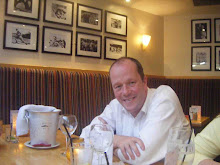
She did like the photo though so that's always something.
Hope you enjoy this Mum. I added this blog to your favourites. Just be glad I didn't make it your homepage.
It's a bit boring, she said.
Controversial or disagreeable I could have lived with, but to be described as boring is crushing.
Nevertheless, on the bright side, I have to say that I find a lot of the stuff my Mum reads to be very dull, so I'm clinging to this liferaft in the meantime until other people deliver their opinions.
She did like the photo though so that's always something.
Hope you enjoy this Mum. I added this blog to your favourites. Just be glad I didn't make it your homepage.
Wednesday, 1 August 2007
Just in case you are wondering...

...and even if you are not, this is me. I just thought I would publish a picture of myself so that, in the unlikely event of meeting any stranger who reads this, at least one of us would know what the other looks like.
Oh, and I also wanted to check that I could do it - post a picture that is.
Isle of Lewis
So, as you can see from the previous post, I visited the Isle of Lewis on Monday.
This is one of the diminishing number of attractive features of my job. I sometimes get to places I haven't been to before, have a meeting with a client and then mooch around for the rest of the day waiting for the plane home.
Lewis was a nice place to mooch around.
From the air it looks bleak and desolate, a croft speckled landscape dappled with many small lochs. Apparently Lewis has about 3% of the UK land mass and 15% of its standing water. From the air I could understand this.
The difference between Lewis and Harris, actually both the same island, was quite striking. Lewis is low-lying, flat machair, covered in a thin, hard soil, which supports few trees and only the hardiest of wild plants like heather, dandelions and other ground huggers. Harris, which I only saw from a distance, was very different. Grey hump-backed mountains leered out from underneath the accumulating cloud. It looked mysterious, dark and exciting with the broiling cloud mass apparently supported by the unpronounceable monolithic mountains.
Lewis, on the other hand, remained breezy and bright. The occasional shower clattered through and, largely due to my ignorance of Gaelic, I missed my turn and continued South. Quite oblivious to my error, I ran through a landscape of peat bogs and sea lochs, many of which incisively cleaved into the landscape for some miles. Peeks of spectacular sandy beaches hinted at the glorious shore lines for which the Western Isles are renowned and it was some reluctance that I eventually realised I had made a mistake and retraced my steps to find my client.
After the meeting I visited the standing stones at Callanish. Having visited Stonehenge before I honestly believe that this is a more spectacular site. These stones are 5,000 years old and are roughly shaped in a cross with a former burial cairn at the centre of the cross. Archaeologists still debate the original purpose of the stones, but clearly they display a knowledge of the stars and it is quite likely that they are of religious, pre-christian, significance.
Callanish, like many historic sites, has that all too common 20th century appendage - a "visitor centre". In many cases this is an affliction, but in the case of Callanish it's quite a small, sympathetic and light building. Built in a curve behind a hill, and therefore out of sight of the stones, it offers a small shop and restaurant. The food was fine, although my can of Cola tasted more home made than the allegedly "home made" bread, and the shop and visitor display were nice.
A few miles north of Calanish is a fine example of an ancient broch, effectively a fortified residence used by ancient landowners. Again, this has a nice visitor centre actually built in to the hillside and it has the added nice touch of being the same shape as the broch enabling them to recreate quite authentically what life might have been like for the residents.
Still further north and I came across one of the most memorable place names I've seen for a while - Butt View. Enough said.
I cut back across to Stornoway. I'd heard before that it was a bit of a miserable place full of drink fuelled and drug addled teenagers but didn't find this to be the case. Admittedly a late Monday afternoon probably wasn't the best time to view the antics of Hebridean youth. Strangely the public toilets at the harbour appeared to be their preferred gathering place - I saw some girls there when I arrived and they were still there when I left two and a half hours later. There must be some attraction I'm missing...
I enjoyed the arts centre An Lanntair which had a display of what can only be described as Gaelic avant-garde art, a type of abstract form with extracts from Gaelic proverbs and poetry imprinted on it. The rest of the town seemed pleasant and sedate. A large and impressive castle overlooks the small inner harbour and people busied themselves about their daily duties.
The small airport sits on an isthmus separating Stornoway from Point and I sat there formulating plans for a further, longer trip to the Western Isles. I had visited Barra earlier in the year and would certainly recommend a trip travelling the length of the Western Isles. It is absolutely made for cycling.
This is one of the diminishing number of attractive features of my job. I sometimes get to places I haven't been to before, have a meeting with a client and then mooch around for the rest of the day waiting for the plane home.
Lewis was a nice place to mooch around.
From the air it looks bleak and desolate, a croft speckled landscape dappled with many small lochs. Apparently Lewis has about 3% of the UK land mass and 15% of its standing water. From the air I could understand this.
The difference between Lewis and Harris, actually both the same island, was quite striking. Lewis is low-lying, flat machair, covered in a thin, hard soil, which supports few trees and only the hardiest of wild plants like heather, dandelions and other ground huggers. Harris, which I only saw from a distance, was very different. Grey hump-backed mountains leered out from underneath the accumulating cloud. It looked mysterious, dark and exciting with the broiling cloud mass apparently supported by the unpronounceable monolithic mountains.
Lewis, on the other hand, remained breezy and bright. The occasional shower clattered through and, largely due to my ignorance of Gaelic, I missed my turn and continued South. Quite oblivious to my error, I ran through a landscape of peat bogs and sea lochs, many of which incisively cleaved into the landscape for some miles. Peeks of spectacular sandy beaches hinted at the glorious shore lines for which the Western Isles are renowned and it was some reluctance that I eventually realised I had made a mistake and retraced my steps to find my client.
After the meeting I visited the standing stones at Callanish. Having visited Stonehenge before I honestly believe that this is a more spectacular site. These stones are 5,000 years old and are roughly shaped in a cross with a former burial cairn at the centre of the cross. Archaeologists still debate the original purpose of the stones, but clearly they display a knowledge of the stars and it is quite likely that they are of religious, pre-christian, significance.
Callanish, like many historic sites, has that all too common 20th century appendage - a "visitor centre". In many cases this is an affliction, but in the case of Callanish it's quite a small, sympathetic and light building. Built in a curve behind a hill, and therefore out of sight of the stones, it offers a small shop and restaurant. The food was fine, although my can of Cola tasted more home made than the allegedly "home made" bread, and the shop and visitor display were nice.
A few miles north of Calanish is a fine example of an ancient broch, effectively a fortified residence used by ancient landowners. Again, this has a nice visitor centre actually built in to the hillside and it has the added nice touch of being the same shape as the broch enabling them to recreate quite authentically what life might have been like for the residents.
Still further north and I came across one of the most memorable place names I've seen for a while - Butt View. Enough said.
I cut back across to Stornoway. I'd heard before that it was a bit of a miserable place full of drink fuelled and drug addled teenagers but didn't find this to be the case. Admittedly a late Monday afternoon probably wasn't the best time to view the antics of Hebridean youth. Strangely the public toilets at the harbour appeared to be their preferred gathering place - I saw some girls there when I arrived and they were still there when I left two and a half hours later. There must be some attraction I'm missing...
I enjoyed the arts centre An Lanntair which had a display of what can only be described as Gaelic avant-garde art, a type of abstract form with extracts from Gaelic proverbs and poetry imprinted on it. The rest of the town seemed pleasant and sedate. A large and impressive castle overlooks the small inner harbour and people busied themselves about their daily duties.
The small airport sits on an isthmus separating Stornoway from Point and I sat there formulating plans for a further, longer trip to the Western Isles. I had visited Barra earlier in the year and would certainly recommend a trip travelling the length of the Western Isles. It is absolutely made for cycling.
Glasgow Airport security is a shambles
Just one month after two men tried to blow up Glasgow airport, security remains lax.
On Monday morning I checked in using the electronic check-in machines in the main concourse for a flight to Stornoway. As I was returning the same day I was also able to check in electronically for my return flight in the evening.
I then went through security, where my boarding pass and carry on luggage were checked, and boarding control, where my boarding pass alone was checked.
At no stage was I asked to provide any photographic ID. In fact, I wasn't required to provide any ID of any sort so nobody could check if I was the person named on the boarding pass.
The same happened again that evening in Stornoway. Again, having already checked in that morning, I by-passed check-in and was not asked to show any ID at security or while boarding.
I think that this is potentially quite a serious matter, particularly given the trend to checking in either using the machines or on-line. Surely, it is quite a simple matter to ensure that ID is checked at security or whilst boarding? My suspicion is that this should have been done but wasn't.
However, given recent events at the airport, you would have been forgiven for thinking that security people should have been more alert.
I've emailed BAA with my concerns but, to date, no reply.
On Monday morning I checked in using the electronic check-in machines in the main concourse for a flight to Stornoway. As I was returning the same day I was also able to check in electronically for my return flight in the evening.
I then went through security, where my boarding pass and carry on luggage were checked, and boarding control, where my boarding pass alone was checked.
At no stage was I asked to provide any photographic ID. In fact, I wasn't required to provide any ID of any sort so nobody could check if I was the person named on the boarding pass.
The same happened again that evening in Stornoway. Again, having already checked in that morning, I by-passed check-in and was not asked to show any ID at security or while boarding.
I think that this is potentially quite a serious matter, particularly given the trend to checking in either using the machines or on-line. Surely, it is quite a simple matter to ensure that ID is checked at security or whilst boarding? My suspicion is that this should have been done but wasn't.
However, given recent events at the airport, you would have been forgiven for thinking that security people should have been more alert.
I've emailed BAA with my concerns but, to date, no reply.
Subscribe to:
Posts (Atom)